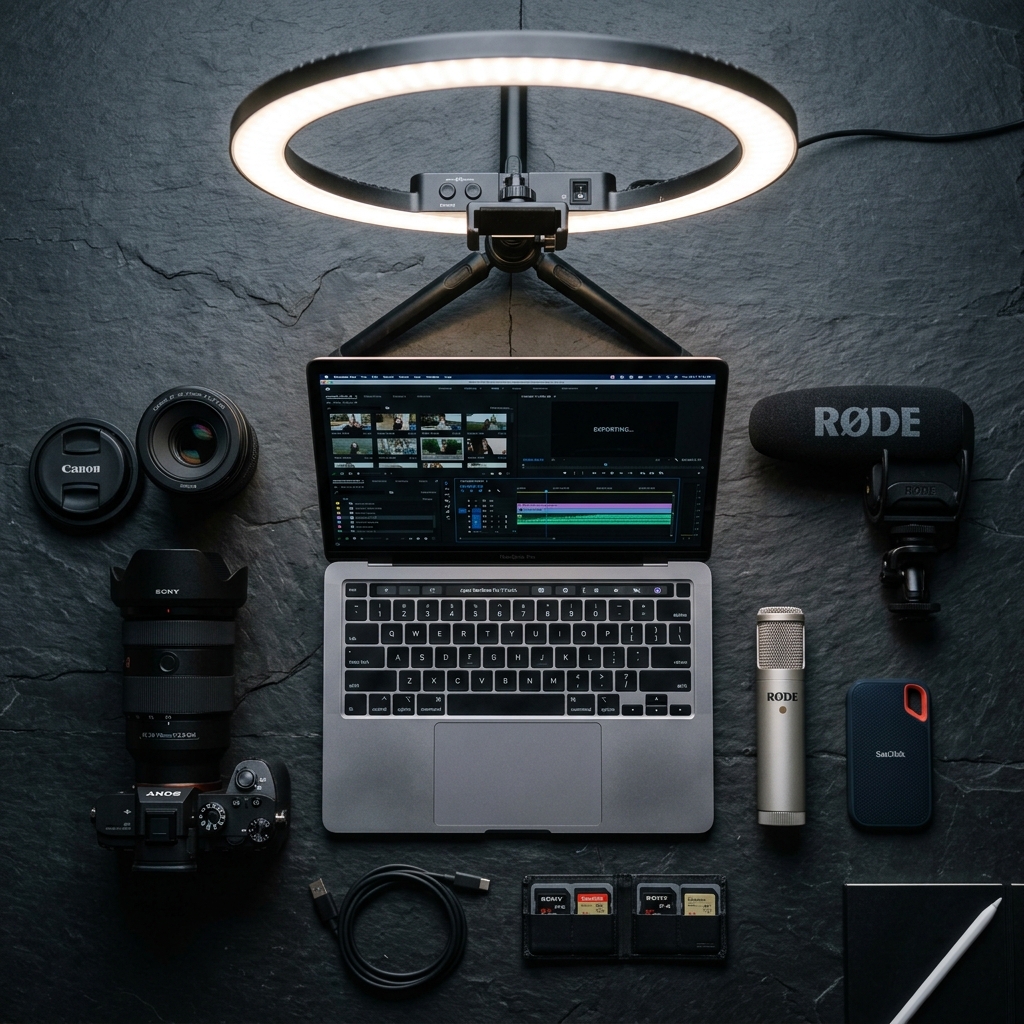
Many content creators treat taxes as a single, lump-sum payment at the end of the year without realizing they are paying too much. Because you are technically running a sole proprietorship or business, the Income Tax Department allows you to deduct business-related expenses from your taxable income.
Here are 5 legitimate business deductions that every content creator should track.
1. Camera Equipment, Lenses, & Lighting
Any hardware required to produce content—DSLR cameras, microphones, tripods, ring lights, and memory cards—qualifies as a business asset. You can either write off the full cost (if below standard limits) or claim annual depreciation deductions to offset your taxes.
2. Laptops and Editing Hardware
Whether you edit on a MacBook Pro or a custom Windows workstation, these editing computers are high-value tools essential for post-production. You can write off these purchases alongside accessories like monitors, keyboards, and hard drives.
3. Software Subscriptions
Do you pay monthly for Adobe Creative Cloud, Figma, Canva Pro, or hosting tools? Since these subscriptions directly fuel your editing and digital workflow, they are fully deductible operational expenses.
4. Internet and Phone Plans
Uploading high-resolution videos requires premium broadband speeds. You can claim your local internet and cell phone bills as deductions. If a connection is shared for personal use, claim a reasonable percentage (e.g., 75% business usage).
5. Studio Workspace or Home Office
If you rent a dedicated workspace or co-working desk, the rent is a direct business deduction. Even if you edit from a dedicated room in your house, a pro-rata portion of your home utility bills can sometimes be written off.
📋 Receipt Rule:
Always request a B2B invoice with your business PAN/GSTIN when buying gear. Keep digitised copies of receipts. CreatersOS lets you compile financial summaries in seconds, making year-end tax preparation with your CA smooth and stress-free.